
It maintains a stable temperature, reduces heat loss, and protects against drafts and cold spots. Good insulation improves well-being, saves on heating and air conditioning, prevents condensation and mold, and creates a cozy and healthy environment for work and relaxation.
In rooms, proper temperature management is especially important at floor level and in the upper zone of the space. An optimal range of 19–26 °C ensures comfort for work, relaxation, and health. Besides temperature differences, the perception of warmth is influenced by the radiant zone—how heat from walls, floors, and ceilings is transferred to the human body. This is particularly important in modern homes with large windows or high ceilings.
When designing floors, consider the possibilities for installing thermal insulation and selecting floor coverings. If the house has no basement and the foundation slab rests directly on the ground, high-quality insulation of the slab becomes a key factor. Proper insulation of the foundation slab helps minimize heat loss, reduce heating costs, and create a comfortable microclimate throughout all floors of the home.
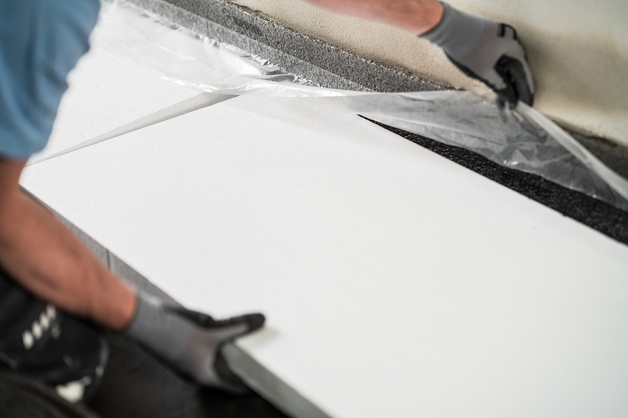
In modern homes, perimeter insulation is often applied when pouring the floor. When selecting materials, it is important to consider their type and functional characteristics, as different types of insulation serve different purposes.
If the house has a basement, the most effective and economical solution is insulating the basement ceiling. Additionally, a lightweight insulation layer can be installed on the floor above the basement to increase comfort.
On the ground floor, insulation is laid on the structural base after waterproofing. For upper floors, a primary waterproofing layer is usually not required, while the floor construction follows the same scheme as the ground floor, ensuring a stable thermal and moisture barrier.
We offer several types of floor thermal insulation that help improve a home’s energy efficiency. Here is a brief overview of each material:
-
Mineral wool — a popular insulation available in boards or rolls. Offers high thermal insulation and comes in two types: glass wool and stone wool.
-
Glass wool — made from melted glass; provides good thermal insulation but is soft and not suitable for floors.
-
Stone wool — strong, fire-resistant, with excellent acoustic properties; ideal for floors, especially in spaces with temperature fluctuations.
-
Expanded polystyrene (EPS) — rigid foam material, moisture-resistant, available in boards.
-
Extruded polystyrene (XPS) — strong, highly insulating, moisture-resistant; optimal for floors on the ground.
-
Polyurethane boards (PIR) — medium-density foam material that fills gaps tightly and provides excellent thermal insulation; also available as spray foam.
-
Cellulose insulation — eco-friendly, made from recycled paper, fills gaps well and retains heat.
The choice of insulation depends on the building type, climate, and operating conditions. Proper installation and adherence to building standards ensure maximum floor efficiency and durability.

