
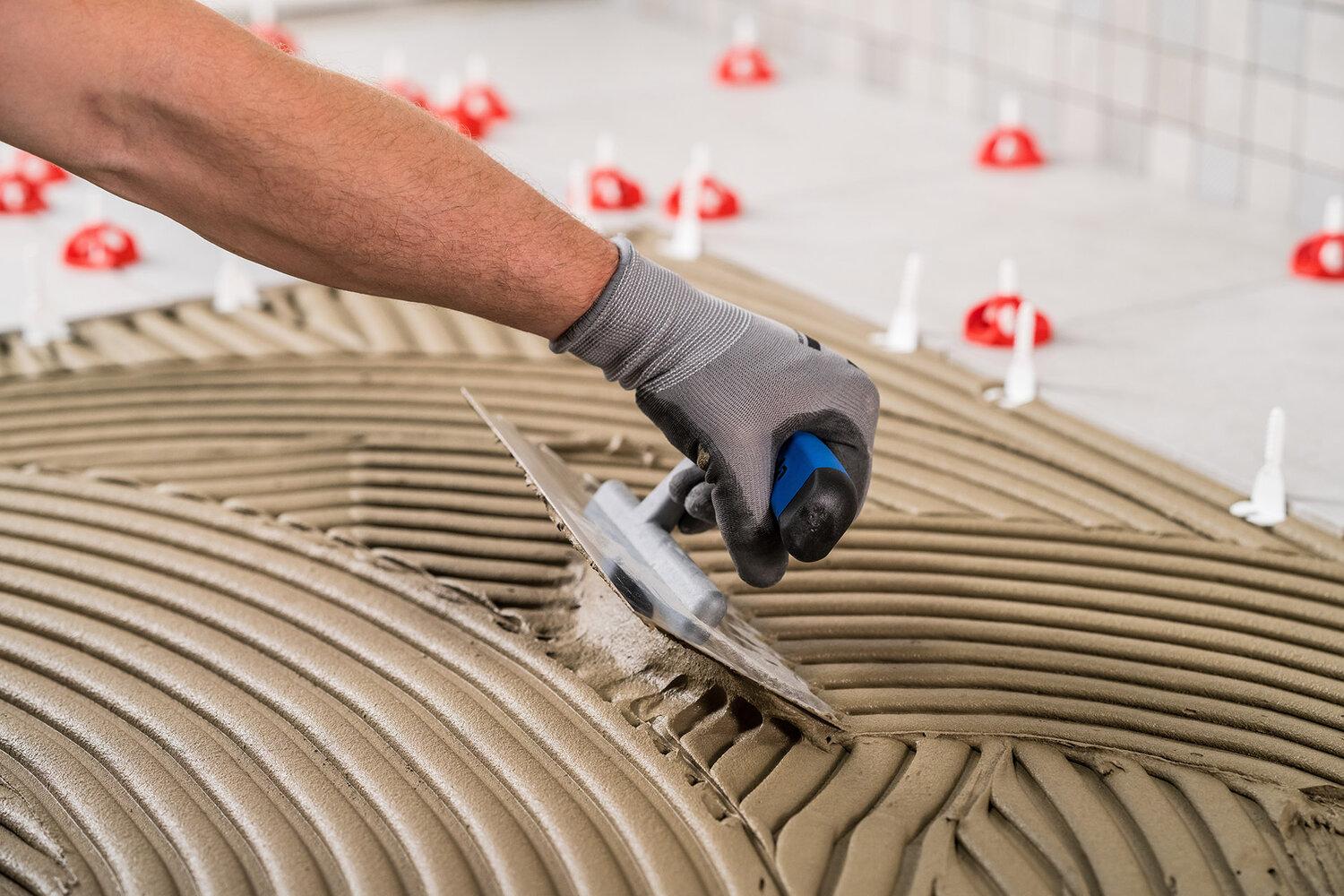
Tile adhesives
The adhesive’s rating according to the standard is always indicated on the packaging, but this information often reflects only minimum values, which can be difficult to apply to a specific situation. The criteria for selecting tile adhesive are explained in detail below. In general, we recommend using our adhesive selection table for cold tile installation, which considers the most typical loads and conditions, helping you make the right choice.
Tile adhesive application process
If described very briefly at a textbook level, the tiling process can be defined as bonding two materials with different properties. It sounds simple, but in practice, it is quite a complex task. For a durable result, when selecting materials, it is necessary to consider not only the basic properties of the tile and substrate but also a number of other factors that significantly affect the final outcome. This is especially true for the adhesive.
Tile adhesive selection process
Selecting the right tile adhesive depends on many factors: the type of tile, the nature of the substrate, environmental conditions, the intended use (e.g., interior or exterior spaces, wet areas), the specific requirements of the construction project, and other considerations.
-
Flexible adhesives can compensate for slight movements of the substrate, for example, in underfloor heating systems, sun-exposed balconies, or terraces. They are deformation-resistant and minimize the risk of cracks.
-
High-strength adhesives are suitable for areas with heavy foot traffic, workshops, or conditions with constant water exposure.
-
For large areas or complex tile patterns that require longer working times, Cemix offers products with extended open time, which remain workable longer and allow enough time to adjust the tiles.
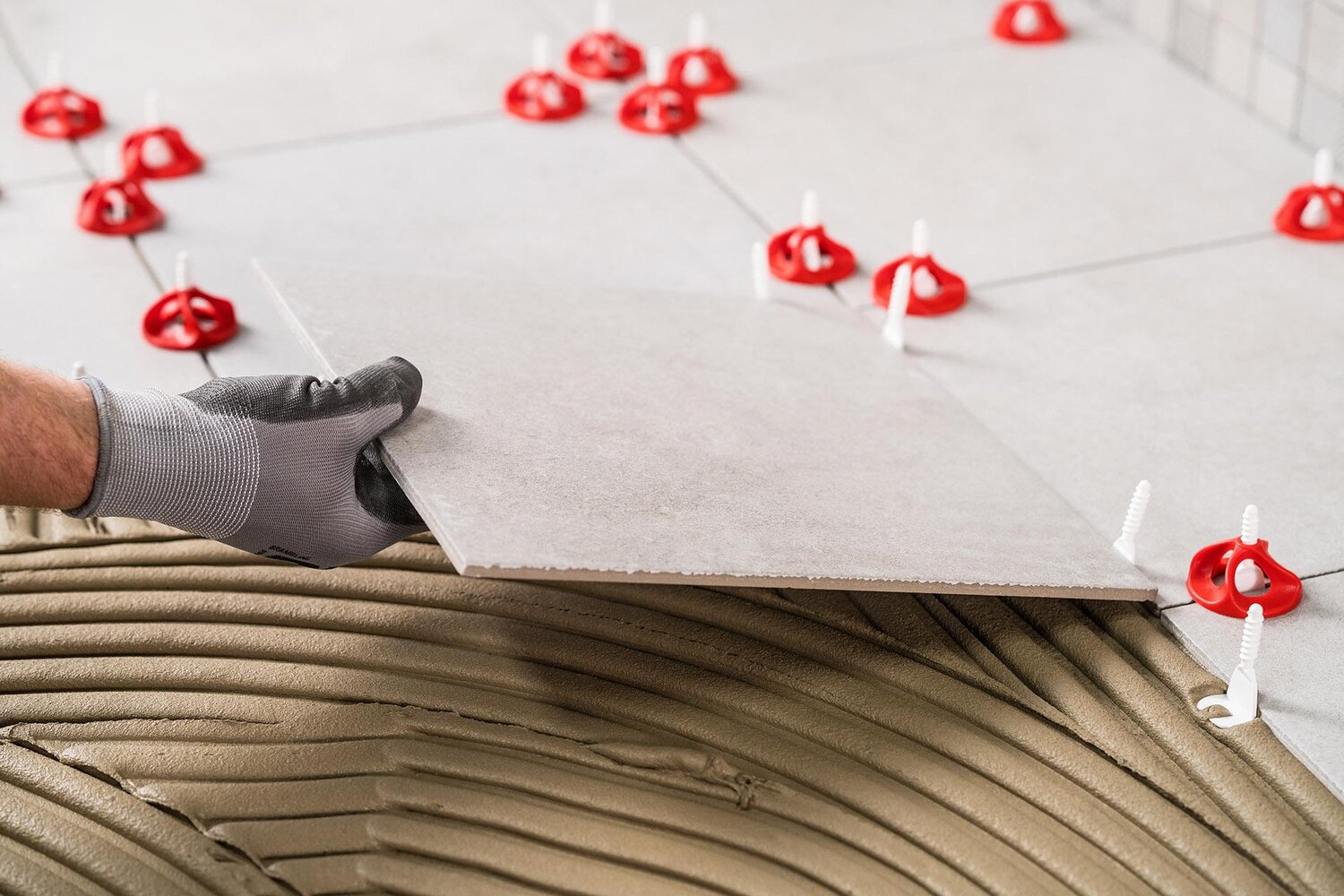
Tile Adhesive Selection Table
Cemix tile adhesive products are available at this link. To select the most suitable material for a specific task, use the tile adhesive selection table for cold installation (see the diagram below).
Binder in adhesives for cold tile installation
Among adhesives for cold tile installation, three types are distinguished based on the binder: cement-based, dispersion-based, and reactive synthetic resins. Besides these, there are adhesives with other binders, but the three mentioned types cover more than 99% of products available on the market.
-
Cement-based adhesives are the most commonly used due to their ease of handling, relatively low cost, and good price-to-performance ratio.
-
Dispersion and, especially, reactive resin adhesives are primarily used on non-absorbent substrates (metal, plastic, glass, etc.) and in cases of special loads (chemical, tensile, etc.).
The classification of tile adhesives for cold installation is governed by two harmonized standards (EN 12002 and EN 12004), according to which adhesives are labeled with the following designations:
-
[C] Cement-based (C1, C2)
-
[D] Dispersion-based (plastic binder) (D1, D2)
-
[R] Reactive synthetic resin (R1, R2)
-
[1] Mortar or adhesive for normal loads
-
[2] Mortar or adhesive for increased loads
-
[T] Flexible adhesive with reduced slip
-
[E] Adhesive with extended open time (30 minutes)
-
[F] Fast-setting adhesive (bond strength of 0.5 N/mm² achieved within 6 hours)
-
[S1] Adhesive capable of deformation ≥2.5 mm
-
[S2] Adhesive capable of significant deformation ≥5 mm
For example, the S1 Flex adhesive is classified as C2 TE S1, which means: “Cement-based adhesive with enhanced strength, deformable, reduced slip, and extended open time.”
What this means in practice:
-
Enhanced requirements – the adhesive has higher adhesion and compressive strength.
-
Deformable – the adhesive can compensate for tile movements, mainly caused by temperature changes and thermal expansion (especially important for large-format tiles).
-
Reduced slip – tiles installed on walls will not slide before the adhesive sets.
-
Extended open time – you have approximately 30 minutes to adjust the position of a tile if it was placed incorrectly.
Related Articles


