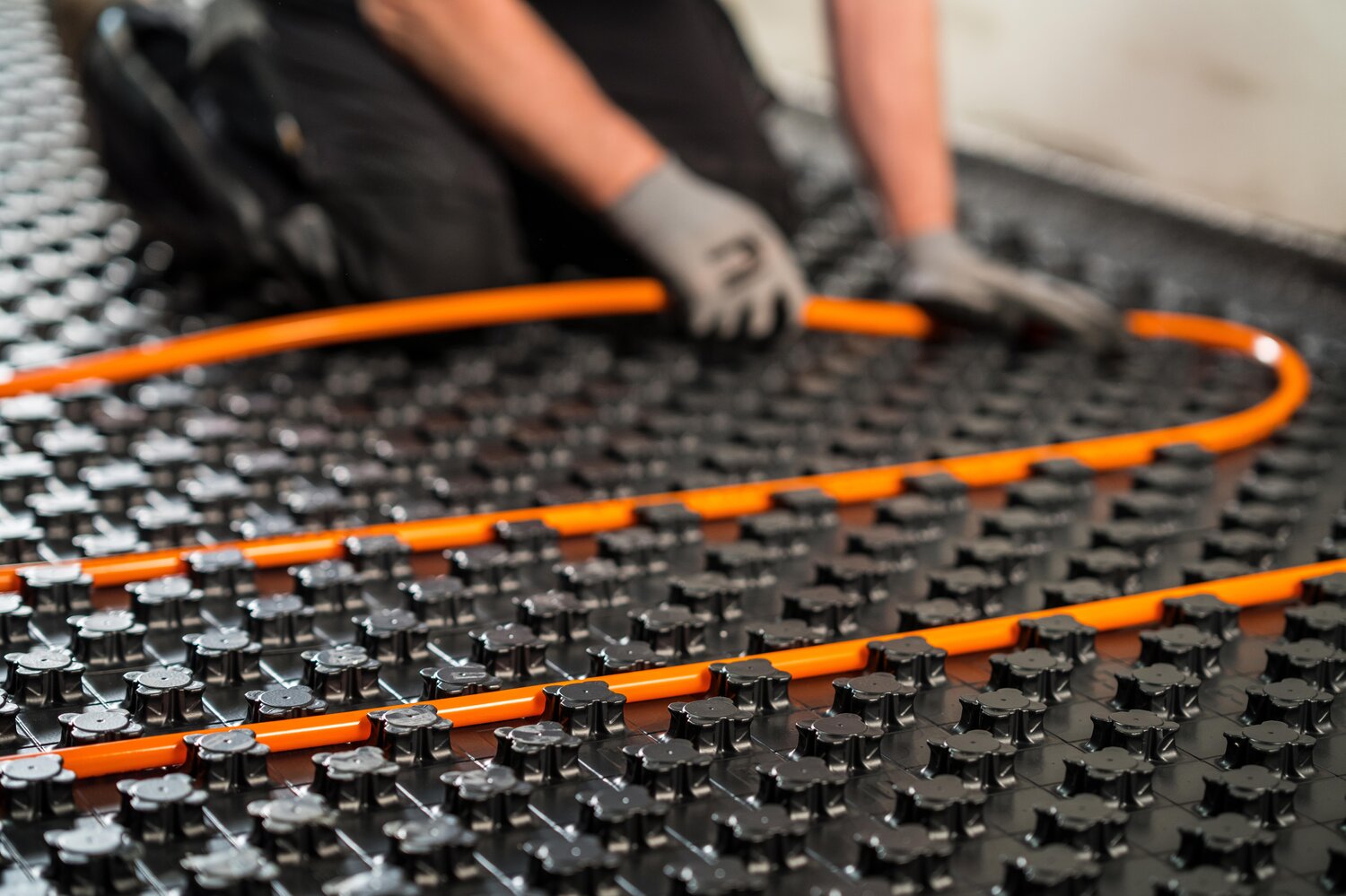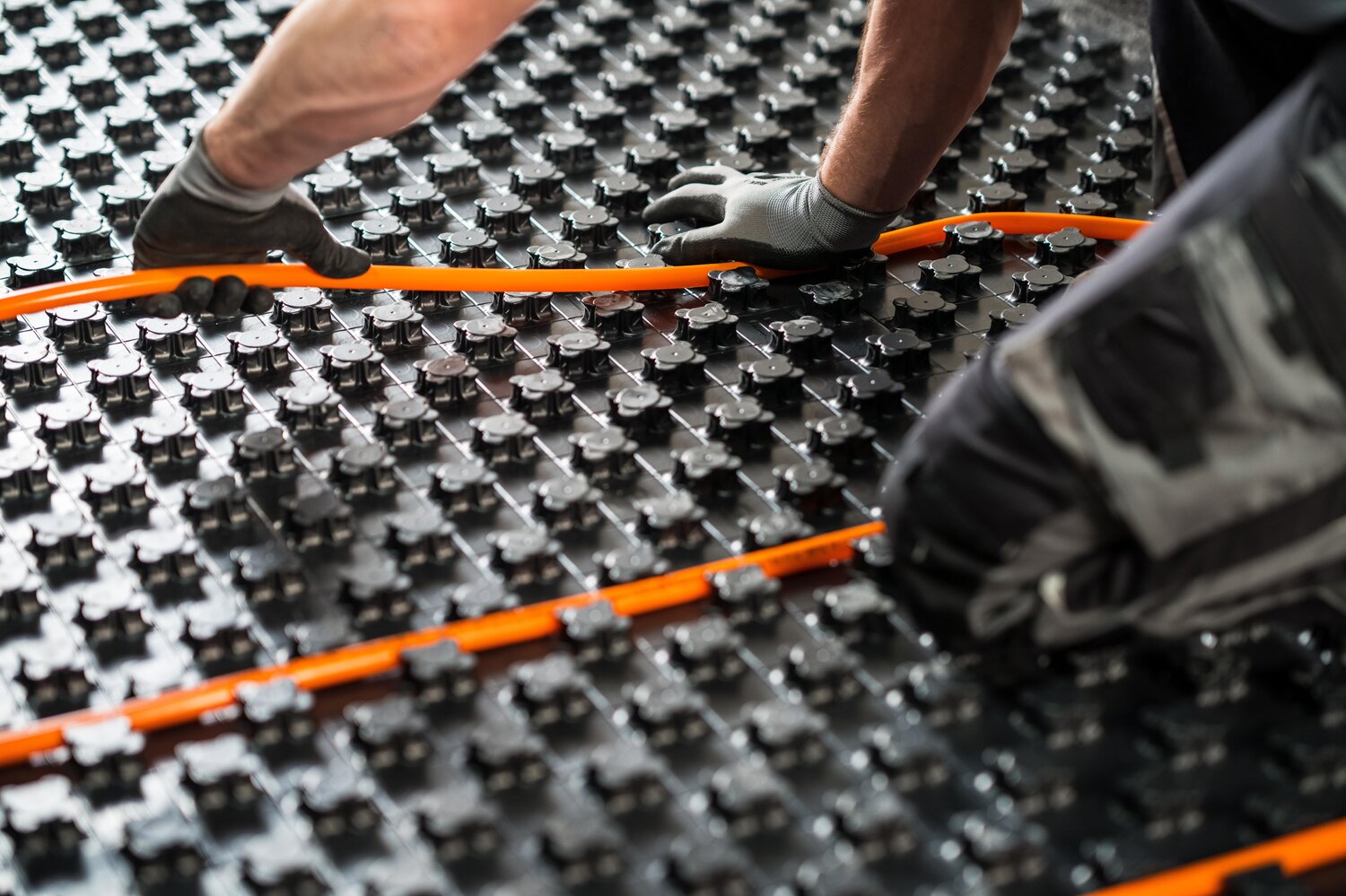
Today, underfloor heating systems are a standard solution for private homes, residential, and office spaces. They provide even temperature distribution, save energy, free up space by eliminating radiators, and allow flexible interior planning.
Layer formation in an underfloor heating system
One of the key requirements for installing an underfloor heating system is creating the correct base layer. Different types of systems (electric or water-based) require varying layer thicknesses. If the ceiling height is limited, installing underfloor heating can be challenging, which is especially relevant during the renovation of existing buildings and apartments.
Thanks to Cemix products and solutions, an efficient underfloor heating system can be implemented even in limited spaces. Depending on the available thickness, the company offers suitable materials and design options that ensure strength, durability, and even heat distribution.
If the available layer thickness is only a few millimeters, only electric underfloor heating systems can be used. In this case, the heating cables are laid along the entire length in a special adhesive or leveling compound. Cemix materials, designed to withstand thermal stresses from rapid temperature changes, are used for this purpose.
For small rooms or sloped areas, the cables are recommended to be laid directly in the tile adhesive. An ideal solution is Cemix S1 Flex, a fiber-reinforced adhesive onto which the covering can be installed immediately.
Thus, properly selected materials and layer sequencing ensure strength, durability, and efficient heat transfer even with minimal construction thickness.
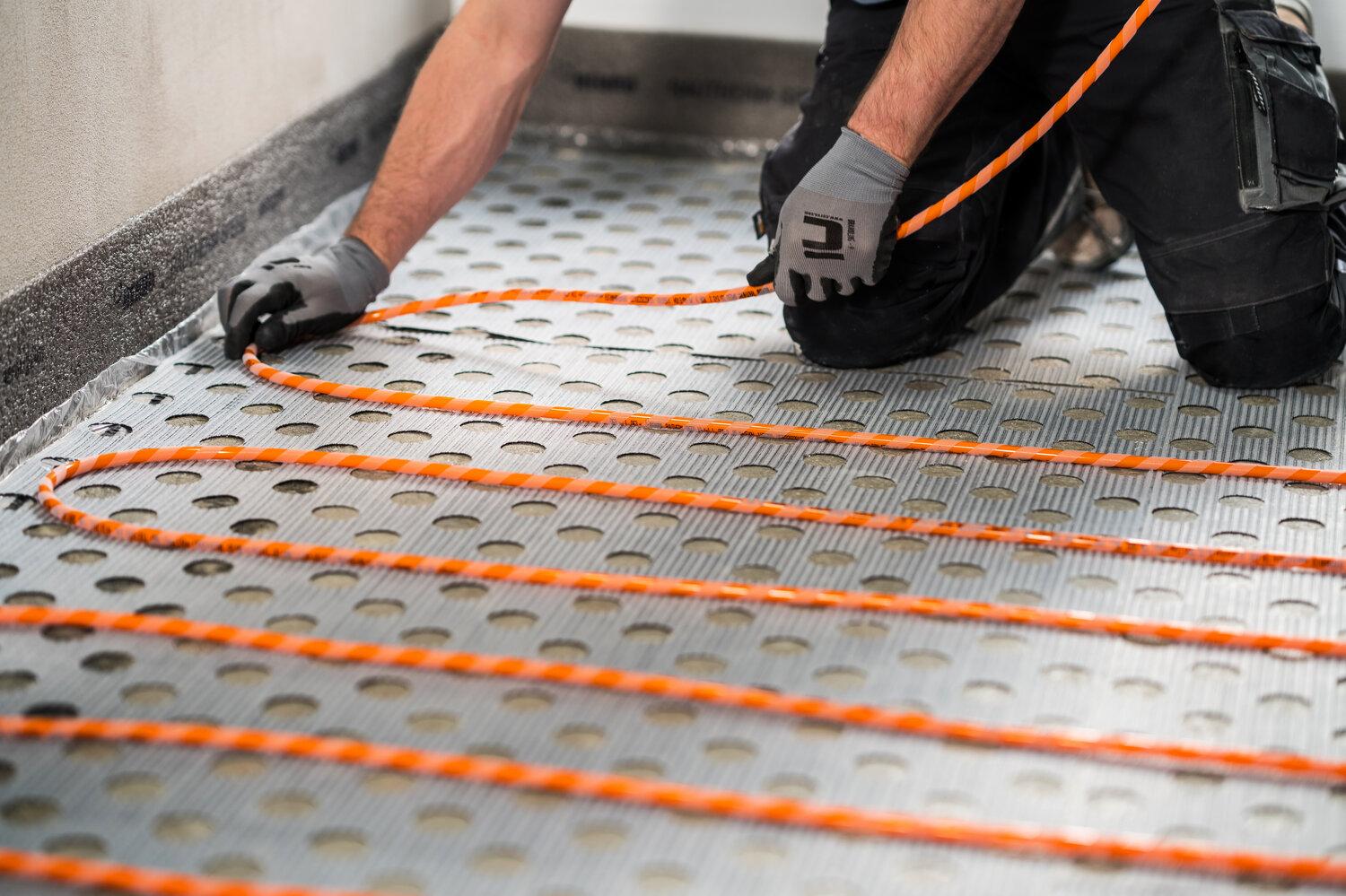
If the available layer thickness is between 2 and 4 cm, hydraulic underfloor heating systems with thin heating pipes can be installed.
In this case, Cemix products specifically designed for leveling and preparing the substrate at minimal layer thickness can be used. The leveling compound creates a flat base, ensures structural strength, and allows for quick installation of the floor covering.
Special attention should be given to Cemix self-leveling compounds, which are suitable for residential spaces, waterproofed wet areas, as well as public and industrial buildings. The compound is applied in layers 10–30 mm thick, has a low specific weight, and is ideal for areas with limited load-bearing capacity of the substrate.
Proper selection of Cemix materials and correct layer sequencing ensures durability, strength, and even heat distribution in the underfloor heating system, even with limited construction thickness.
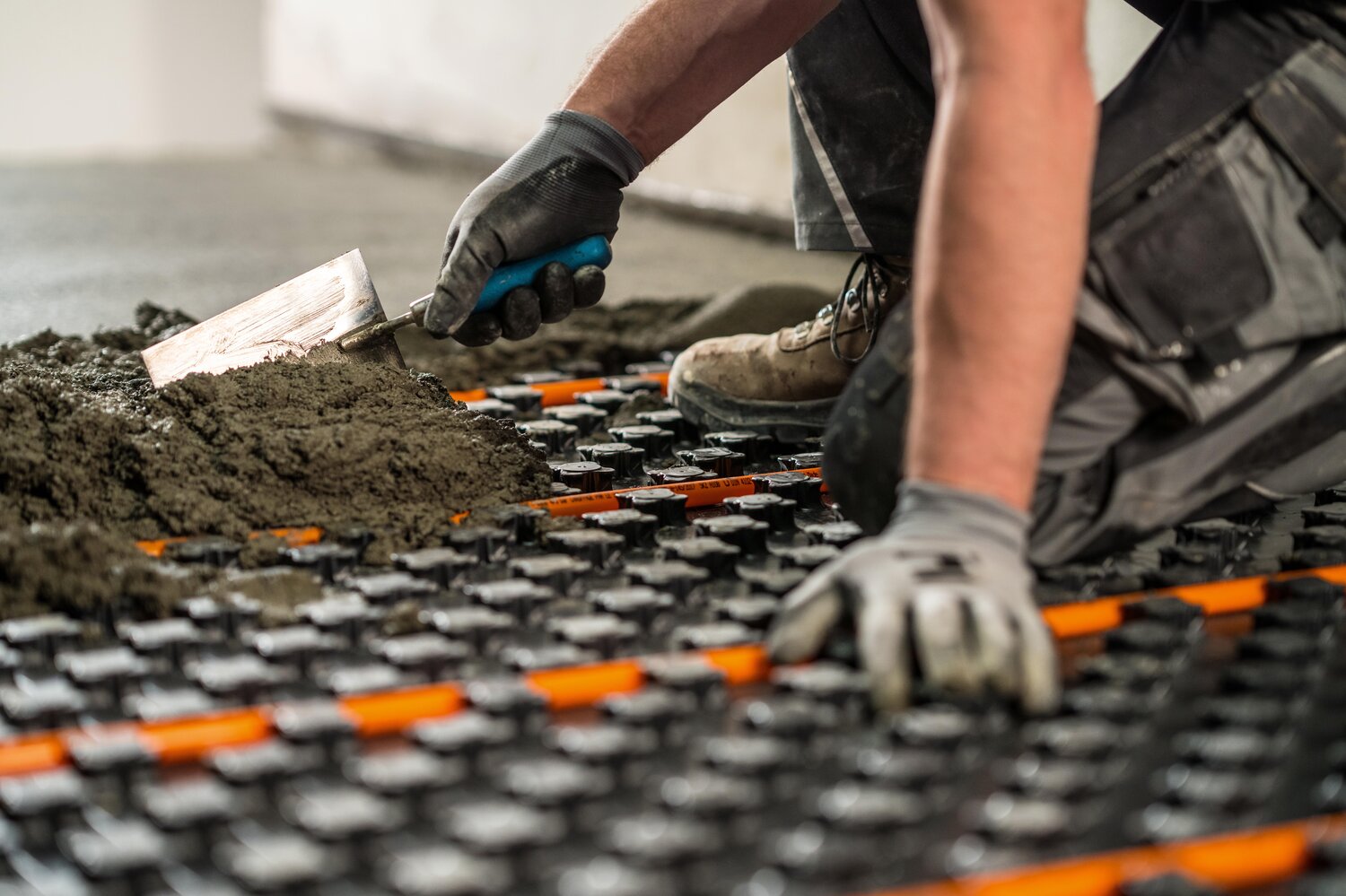
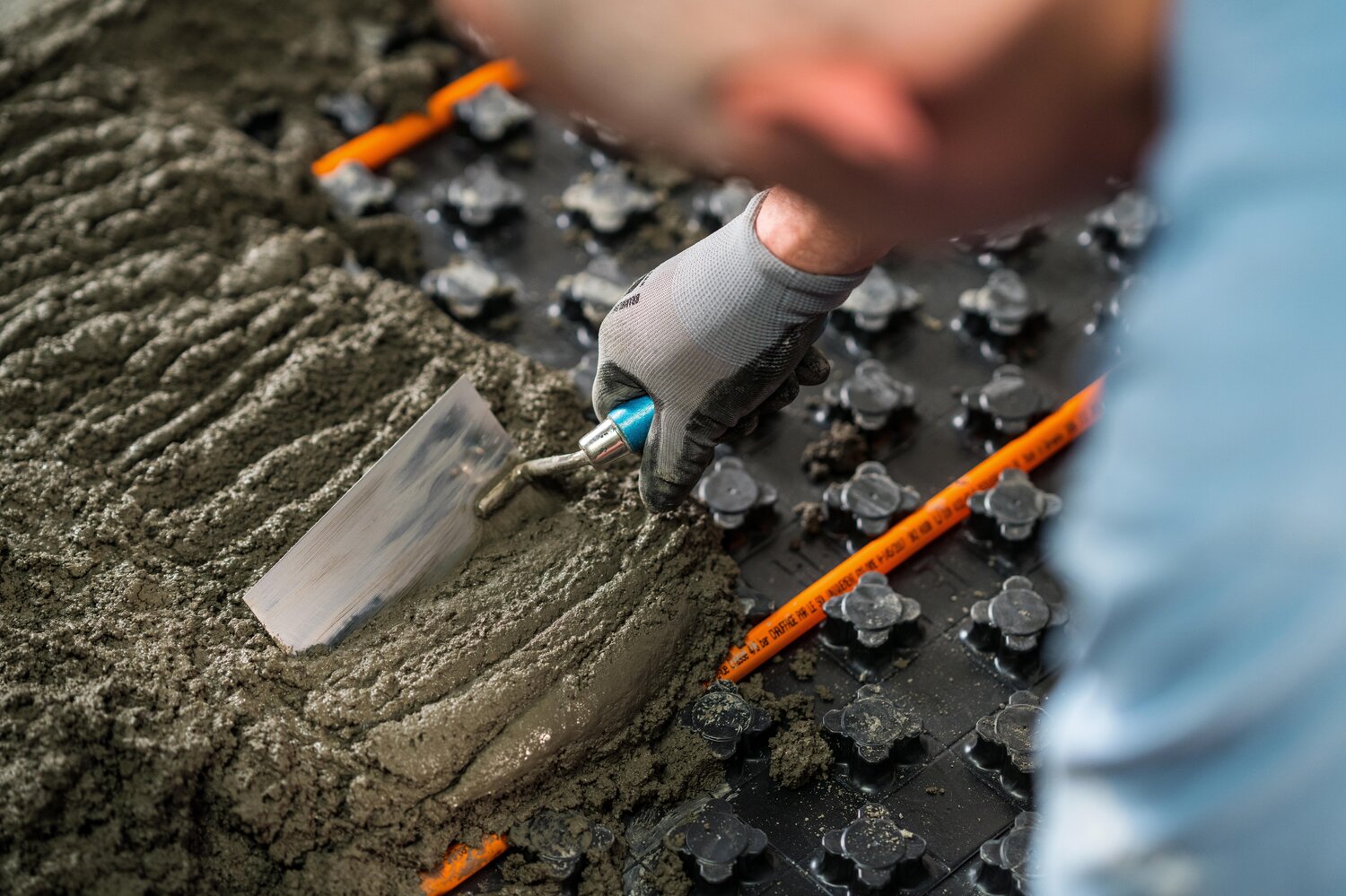
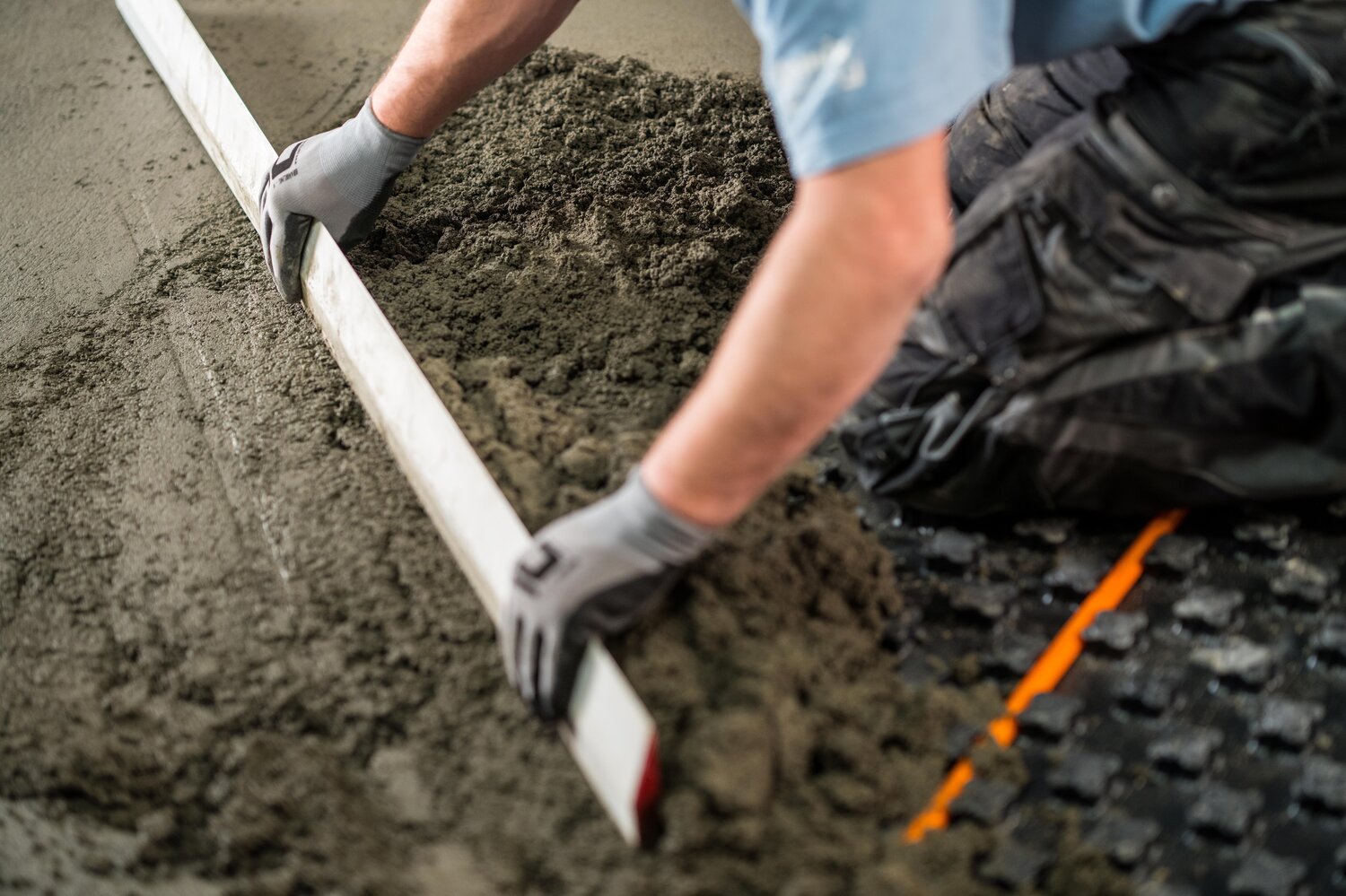
If a leveling layer of 4–10 cm is required, the underfloor heating pipes are laid directly into the cement screed. For this, strong Cemix cement mixes specifically designed for floor leveling and embedding heating elements are recommended.
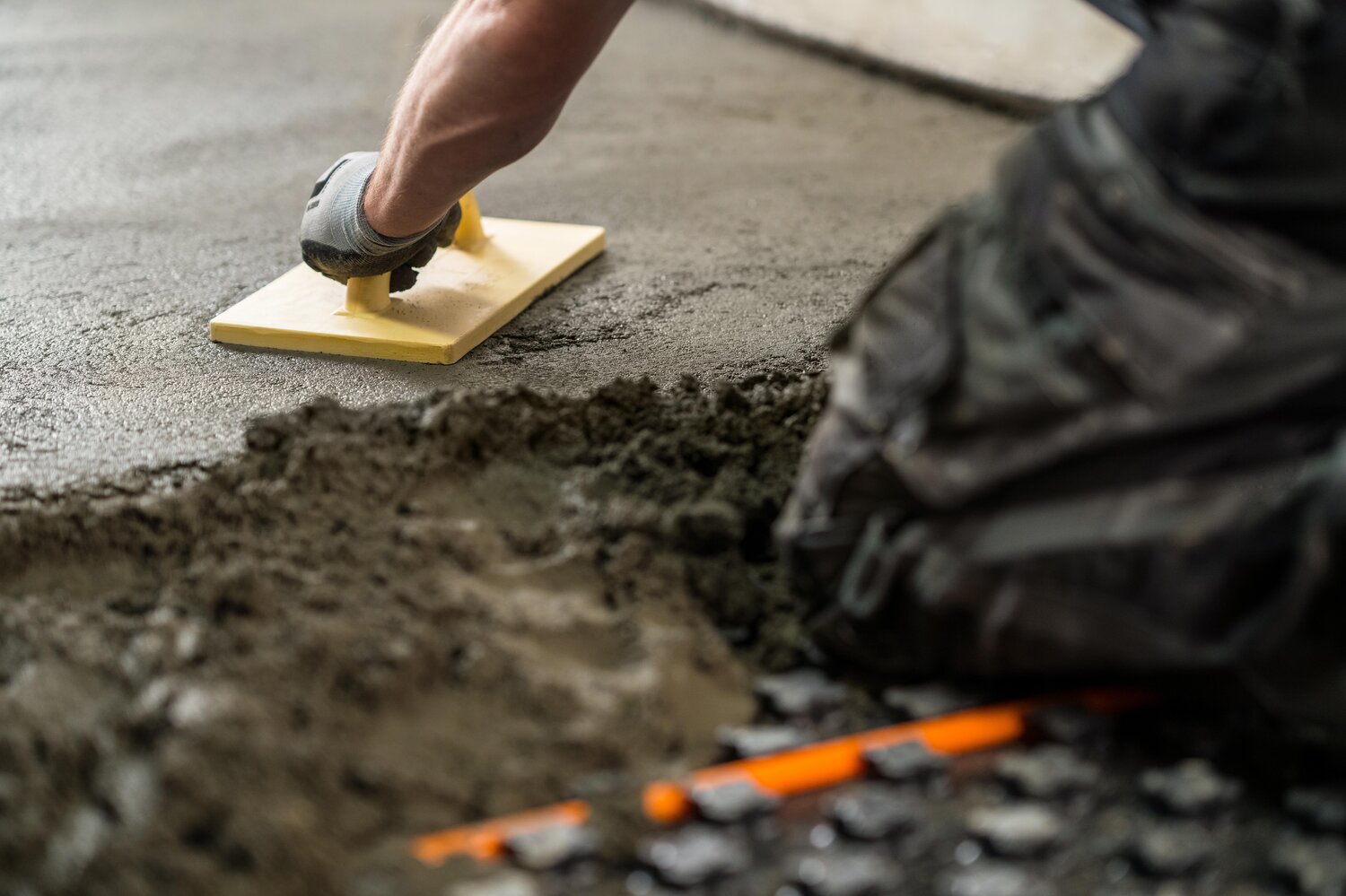
The cement screed provides reliable pipe encasement, even heat distribution, and high structural strength. A properly executed layer allows immediate installation of the finishing floor covering, including tiles, parquet, or laminate, without the need for additional leveling compounds.
Solutions for any situation
When installing an underfloor heating system or renovating old floors, owners may encounter various challenges. The Cemix product range allows for selecting suitable materials for any situation and operating conditions. The company offers not only the materials but also expert recommendations on installation technology, screed thickness selection, and substrate preparation to ensure a durable and efficient underfloor heating system.